What Determines Blepharoplasty Surgery Cost in Delhi? A Clinical Breakdown
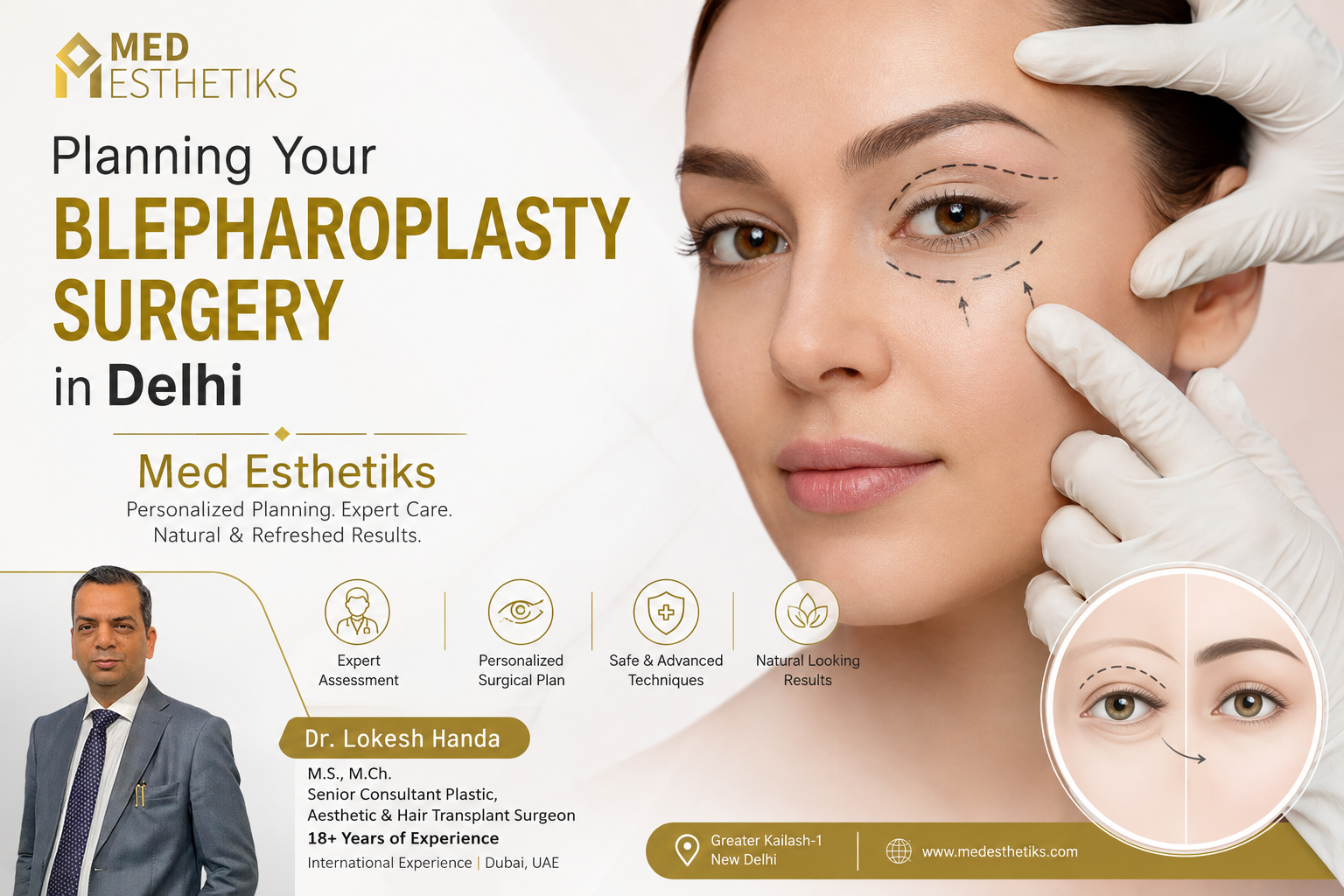
Introduction to Periorbital Rejuvenation and Eyelid Aesthetics
The delicate periorbital region surrounding the human eye plays an irreplaceable role in facial expression, non-verbal communication, and overall aesthetic vitality. Because the skin of the upper and lower eyelids is among the thinnest across the entire human body, it is frequently the first structural zone to display visible signs of chronologic aging, environmental photo-damage, and genetic tissue laxity. Over time, progressive breakdown of structural proteins—specifically collagen and elastin—causes upper eyelid skin to lose tensile strength and droop downward. Simultaneously, weakening of the underlying orbital septum allows intraorbital fat pads to herniate forward, resulting in heavy upper hooding or prominent lower eye bags. For individuals seeking to address these structural changes, undergoing Blepharoplasty surgery in Delhi provides an effective, medically sound approach to restoring anatomical balance and a naturally refreshed appearance.
When patients begin investigating periorbital surgery, understanding procedural nuances and financial considerations is an essential first step. Rather than being a standardized procedure with uniform pricing, eyelid surgery is highly individualized. Determining an accurate assessment of Blepharoplasty surgery cost in Delhi requires examining the unique anatomical factors of each patient, the precise surgical techniques selected, facility standards, and the post-operative support needed to ensure optimal healing and natural-looking outcomes.
Anatomical Factors Influencing Blepharoplasty Surgery in Delhi
Every pair of eyes possesses a distinct anatomical configuration influenced by bone structure, muscular tone, skin thickness, and fat distribution. Consequently, surgical planning must be carefully adapted to these individual variables. The upper and lower eyelids are complex, multi-layered structures comprising the epidermis, orbicularis oculi muscle, orbital septum, levator aponeurosis, and specialized periorbital fat compartments. Age-related changes can affect any or all of these layers in varying degrees.
In the upper eyelid, progressive skin laxity (dermatochalasis) may create deep cutaneous folds that rest upon the eyelash line. In severe cases, this tissue overhang extends beyond the margin of the lid, restricting peripheral vision and inducing chronic eyebrow strain as patients compensate by elevating their forehead muscles. In contrast, lower eyelid aging is primarily characterized by the weakening of the orbital septum, leading to the anterior projection of nasal, central, or lateral fat pads. This tissue displacement often creates deep tear trough deformities and shadows that present as chronic dark circles. A meticulous Blepharoplasty surgery procedure in Delhi is tailored to systematically recontour these specific layers, removing or repositioning redundant tissue while preserving essential structural support.
Eyelid Assessment & Clinical Evaluation Protocols
Achieving safe, aesthetically pleasing results begins with a comprehensive pre-operative consultation. A thorough evaluation ensures that surgical recommendations are clinically appropriate and aligned with the patient’s anatomical needs and health profile. During an initial consultation with a qualified Plastic surgery doctor in Delhi, several baseline parameters are systematically reviewed:
- Ocular Surface & Tear Film Dynamics: Evaluating tear production, blink mechanics, and any underlying dry eye symptoms to prevent post-operative ocular surface irritation.
- Eyelid Position & Tone: Measuring the supratarsal crease height, margin-reflex distance, and lower lid snap-back elasticity to rule out ligamentous laxity or ptosis (drooping of the upper lid margin).
- Fat Pad Herniation Patterns: Identifying the exact location of pseudo-herniated orbital fat in both upper and lower compartments to plan precise excision or fat-grafting repositioning.
- Periorbital Bone Architecture: Assessing orbital rim support, brow position, and malar transition zones to avoid hollowed or over-excised post-surgical contours.
By establishing these foundational anatomical metrics, the surgical team can construct an individualized operative outline that prioritizes functional safety alongside aesthetic refinement.
Detailed Breakdown of Blepharoplasty Surgical Techniques
Eyelid surgery demands exquisite precision, where minor variations measured in millimeters directly influence functional and aesthetic outcomes. Depending on whether concerns reside in the upper lids, lower lids, or both regions, specific surgical techniques are employed:
Upper Eyelid Blepharoplasty
Upper eyelid surgery focuses on removing redundant skin, trimming hypertrophic orbicularis muscle, and sculpting medial fat pockets. Incisions are strategically placed within the natural supratarsal crease fold. When the eye is open, the resulting incision line remains concealed within the natural contour of the eyelid fold.
Lower Eyelid Subciliary Blepharoplasty
When lower eyelid aging presents with noticeable skin excess, deep wrinkling, and tissue sagging, an external subciliary approach is utilized. The surgical incision is positioned immediately below the lower lash line. Through this access point, fat pads are recontoured or repositioned into the tear trough crease, excess skin is conservatively trimmed, and the lower lid margin is stabilized to ensure crisp contouring.
Transconjunctival Lower Blepharoplasty
For patients who exhibit prominent under-eye bags caused by fat herniation without significant skin looseness, a transconjunctival approach is often the ideal choice. The surgical incision is made entirely on the inner surface of the lower eyelid (the conjunctiva). Because no external skin incision is made, there is no visible cutaneous scar, and recovery is streamlined while fat pockets are re-sculpted or repositioned.
Four-Lid (Quad) Blepharoplasty
When age-related changes affect both upper and lower eyelids simultaneously, a combined four-lid procedure provides comprehensive periorbital harmony. Addressing all four quadrants in a single surgical session ensures consistent aesthetic balance across the upper face.
Anesthesia Protocols & Surgical Safety Standards
Patient comfort and physiological stability are critical priorities during any surgical intervention. The selection of anesthesia depends on procedural complexity, the patient’s medical history, and personal preference:
- Local Anesthesia with Intravenous Sedation: Isolated upper blepharoplasty or single-approach lower blepharoplasty is commonly performed using local anesthesia combined with twilight sedation. This protocol ensures complete local pain block while keeping the patient relaxed and comfortable throughout the procedure.
- General Anesthesia: For four-lid blepharoplasties or combined aesthetic procedures, general anesthesia managed by a board-certified anesthesiologist provides complete airway control and deep patient rest.
Performing these procedures within an accredited Plastic surgery clinic in Delhi equips the surgical team with sterile operating suites, emergency monitoring systems, and trained nursing staff adhering to international safety protocols.
Primary Financial Drivers of Eyelid Surgery Investment
Prospective patients evaluating surgical options often seek clarity regarding overall procedural costs. Because blepharoplasty is a highly customized surgical treatment rather than a fixed off-the-shelf service, overall expenses reflect several distinct clinical elements. Key factors influencing Blepharoplasty surgery cost in Delhi include:
- Procedural Complexity and Extent: Single-zone procedures (such as isolated upper lid surgery) require less operative time and surgical intervention than lower lid fat repositioning or comprehensive quad blepharoplasty.
- Surgeon Qualifications and Expertise: Board-certified specialists with formal super-specialization degrees (M.S., M.Ch.) and dedicated fellowship training in facial plastic surgery command fees reflecting their high clinical precision, low complication rates, and refined artistic judgment.
- Facility Infrastructure & Accreditation: Performing surgery in fully accredited medical centers with high-grade sterilization facilities, advanced surgical instrumentation, and dedicated recovery suites contributes to procedural overhead.
- Anesthesia and Clinical Team Fees: Total costs include professional fees for certified anesthesiologists, specialized surgical technicians, and post-operative nursing personnel.
- Post-Operative Support Packages: Comprehensive care plans incorporate follow-up assessments, wound management dressings, suture removal, and customized long-term scar care guidance.
When evaluating overall Plastic surgery cost in Delhi, prioritizing low upfront cost over clinician credentials or facility safety can increase the risk of complications such as lagophthalmos (incomplete lid closure), asymmetry, or excessive tissue removal. Investing in experienced surgical care ensures a balanced approach that respects periorbital functionality and natural facial proportions.
Recovery Timeline and Phase-by-Phase Healing Expectations
Understanding the post-operative recovery journey enables patients to plan work schedules and daily activities with confidence:
- Phase 1: Immediate Post-Op (Days 1 to 3): Mild to moderate swelling, localized bruising, and tightness across the eyelids are normal physiological responses. Applying cold compresses at regular intervals helps minimize tissue edema. Mild temporary blurriness may occur due to protective ophthalmic ointments.
- Phase 2: Suture Removal & Initial Healing (Days 5 to 7): Fine external sutures are carefully removed in the clinic. Swelling begins to decline significantly, allowing patients to resume light household activities and sedentary work.
- Phase 3: Social Recovery (Weeks 2 to 3): Most visible bruising dissipates, allowing patients to feel comfortable returning to public settings and regular social commitments. Camouflage cosmetics may be applied once incision sites are fully re-epithelialized.
- Phase 4: Maturation & Final Results (Months 1 to 3): Residual micro-swelling completely resolves, revealing refined, smooth contours. Incision scars mature into faint, thin lines that blend naturally into eyelid creases and lash lines.
Post-Operative Care Protocols & Incision Management
Diligent post-operative care is vital for promoting smooth tissue healing and achieving discreet, fine-line scar formation:
- Cold Application: Use sterile cold packs wrapped in soft gauze during the first 48 hours to restrict capillary oozing and manage swelling.
- Head Elevation: Sleep with the head elevated at a 30-to-45-degree angle for the first week to encourage lymphatic drainage from the periorbital tissues.
- Physical Restraint: Refrain from heavy lifting, strenuous cardiovascular exercise, bending forward, or rubbing the eyes for at least two weeks to avoid elevated vascular pressure.
- Ophthalmic Hygiene: Administer prescribed antibiotic eye drops and lubricating ointments strictly as directed. Avoid wearing contact lenses until cleared by your surgical specialist.
- UV Protection: Protect delicate healing skin from sun exposure by wearing broad-spectrum UV-blocking sunglasses when stepping outdoors.
Understanding Surgical Safety, Potential Risks, and Outcome Boundaries
Blepharoplasty is a safe, highly reproducible surgical procedure when performed by an experienced specialist. However, as with any invasive medical intervention, prospective patients should be fully informed regarding potential temporary side effects and realistic outcome boundaries.
Common temporary responses include dry eye sensations, temporary tearing, mild light sensitivity, transient asymmetry during early swelling phases, and minor localized bruising. Severe complications—such as ectropion (outward turning of the lower lid) or persistent lagophthalmos—are rare and largely preventable through conservative tissue removal and precise surgical planning. While blepharoplasty effectively eliminates excess skin folds and smooths herniated fat pads, it does not halt the natural aging process completely or alter fundamental facial bone structure. Maintaining clear communication with your clinician fosters realistic expectations and ensures high long-term satisfaction.
Why Choose Dr. Lokesh Handa at Med Esthetiks in Greater Kailash-1?
When seeking guidance from a practitioner recognized as a Best plastic surgeon in Delhi or a Top plastic surgeon in Delhi, prospective patients value board certification, meticulous clinical skill, and open patient communication.
At Med Esthetiks, located in Greater Kailash-1, South Delhi, surgical care is directed by Dr. Lokesh Handa, M.S., M.Ch., a Senior Consultant Plastic, Aesthetic & Hair Transplant Surgeon with over 18 years of specialized surgical experience. Respected as a skilled Cosmetic plastic surgeon in Delhi and Best cosmetic surgeon in Delhi, Dr. Handa emphasizes individualized diagnostic evaluations, structural preservation, and natural-looking outcomes.
Med Esthetiks is established as a premier Best cosmetic clinic in Delhi, serving individuals across New Delhi and the broader Delhi NCR region. Every eyelid procedure is carefully customized to harmonize with the patient’s overall facial aesthetics, supported by rigorous clinical protocols, tailored aftercare, and comprehensive follow-up support.
Frequently Asked Questions Regarding Blepharoplasty
How does an upper blepharoplasty differ functionally from lower blepharoplasty?
Upper blepharoplasty focuses on restoring the upper visual field and supra-orbital contour by removing excess skin folds, trimming thin muscle strips, and sculpting herniated fat pads through an incision hidden in the natural supratarsal fold. In contrast, lower blepharoplasty targets under-eye bags, dark shadows, and lower lid skin laxity through either a subciliary incision below the eyelashes or an internal transconjunctival entry point. While upper lid surgery addresses overhang and heaviness, lower lid surgery smooths the transition between the eye and cheek.
Will surgical incisions leave noticeable scars around my eyes?
Incision lines for blepharoplasty are intentionally integrated into existing natural skin folds to ensure subtle healing. Upper blepharoplasty incisions rest within the supratarsal crease, hiding them completely when your eyes are open. Lower eyelid incisions are placed either immediately beneath the lower eyelash line or inside the eyelid itself (transconjunctival technique), leaving no external scar. Over time, these fine incisions mature into pale, soft traces that naturally blend into surrounding tissue textures.
What clinical factors cause eyelid surgery cost estimates to vary between individuals?
Blepharoplasty pricing varies based on individual anatomical requirements and surgical parameters. Key variables include whether single-lid (upper or lower) or four-lid (quad) surgery is performed, the specific technique required (such as complex fat repositioning versus simple fat excision), the type of anesthesia administered, facility infrastructure standards, and the formal qualifications and experience of your plastic surgeon. An in-person consultation allows for an accurate, tailored estimate based on your specific clinical plan.
Is eyelid rejuvenation surgery painful during the operation or recovery phase?
Eyelid surgery is performed under local anesthesia with sedation or general anesthesia, ensuring patients remain completely pain-free throughout the entire procedure. During the initial post-operative recovery phase, patients generally experience mild tightness, cool aching, or minor dryness rather than severe pain. Any early discomfort is easily controlled using prescribed oral pain relievers, lubricated eye drops, and cold compresses applied during the first few days of healing.
What is the typical timeline before a patient can return to work and social activities?
Most patients comfortably return to desk work and routine social interactions within 7 to 10 days post-surgery. Suture removal is typically completed between days 5 and 7. Residual micro-swelling and minor bruising can be easily camouflaged with light cosmetics once the skin incisions have fully closed. Strenuous physical exercise, heavy lifting, and vigorous athletic activities should be avoided for approximately two to three weeks to protect healing tissues.
How long do the aesthetic results of blepharoplasty typically last?
Blepharoplasty delivers long-lasting structural enhancements by physically removing excess skin and repositioning underlying fat pads. Upper blepharoplasty results typically maintain their aesthetic benefits for 10 to 15 years or longer, while lower eyelid fat repositioning is frequently permanent. Although natural chronologic facial aging continues over time, maintaining healthy skincare habits, protecting skin from UV radiation, and avoiding smoking help preserve your refreshed appearance for years.
What are the most common temporary side effects experienced after blepharoplasty?
Following eyelid surgery, patients commonly experience mild localized swelling (edema), temporary bruising around the orbital rim, increased sensitivity to bright light, slight eye dryness or tearing, and mild visual blurriness caused by protective ophthalmic ointments applied during surgery. These expected physiological responses gradually resolve over the first one to two weeks as tissue healing progresses.
Can blepharoplasty be performed simultaneously with other cosmetic facial procedures?
Yes, blepharoplasty is frequently combined with complementary aesthetic procedures to achieve balanced facial rejuvenation. Common combination treatments include brow lifts to elevate heavy eyebrows, mid-face lifts, autologous fat grafting to restore lost facial volume, or laser skin resurfacing to improve fine surface wrinkles. Combining procedures allows patients to undergo a single anesthesia session and coordinate their recovery period effectively under unified medical supervision.
Choosing to undergo Blepharoplasty surgery in Delhi is a thoughtful decision toward revitalizing your facial aesthetics and addressing functional lid concerns. By understanding how anatomical structures, surgical technique variations, facility standards, and specialist expertise influence treatment planning, prospective patients can approach their periorbital rejuvenation journey with confidence and clarity.
If you are considering eyelid rejuvenation and would like to explore tailored surgical options, we invite you to schedule a consultation with Dr. Lokesh Handa at Med Esthetiks in Greater Kailash-1, New Delhi. Experience how individualized clinical care, ethical surgical planning, and understated refinement can restore a vibrant, natural-looking appearance to your eyes.