"Sweet Blossoms" by Oleksa Kolomiitsev
Compared to other manifestations of human imagination, theatrical art aims to refine the worldview of the so-called audience member who goes to the theater either: a) purposefully, b) by chance, c) with the goal of picking up a woman (or a man), d) by assignment from the department of culture, or e) simply for company. Instead, Ukrainian theater as a phenomenon has mostly bogged itself down in clownery and myth-making at the demand of state (and other) institutions. The chimeras of false beliefs and liberation from prejudices are not in the theater’s crosshairs today. This is a fact. However, there is an exception to every rule. An exception is not marginality; it is not showing off. It is something that offers hope and pleasure through what is seen.
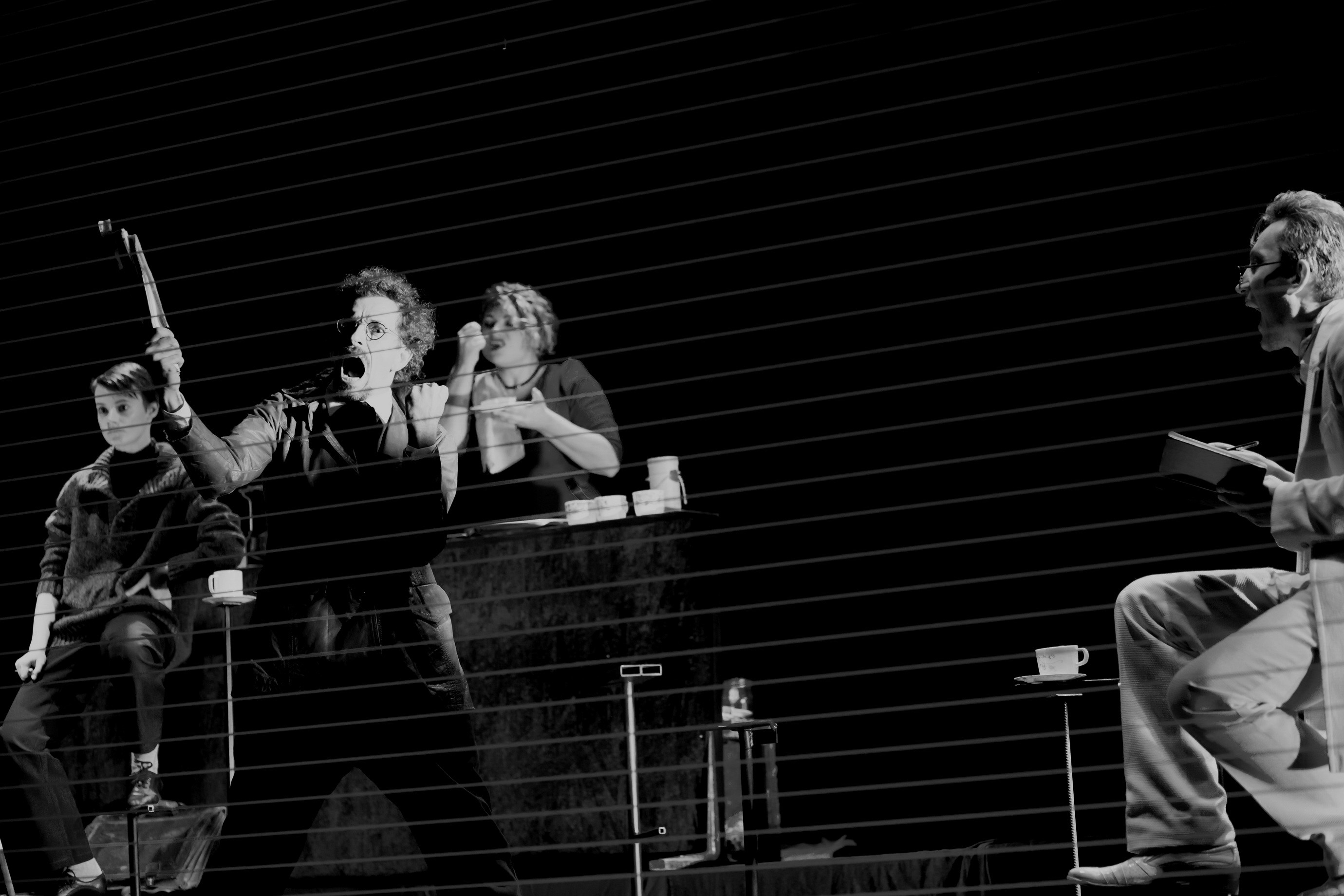
There is a certain director in Ukraine — Oleksa Kolomiitsev. Not a star, not a TV personality, not a… not a… not a… But despite everything, he exists. His productions do not bring so-called pleasure or sweet emotions. Rather, they are sessions of active psychotherapy designed to reboot worldviews. Without exaggeration, his narratives are hyper-topical in the search for the notorious truth. In particular, Kolomiitsev’s latest production, “Sweet Blossoms”, is deeply (and perhaps all too) moralistic in its message to the Ukrainian nation — not through slogans and catchphrases, not through patriotic appeals, but through the agony of birthing free thought. “Think freely,” Kolomiitsev tells his audience, and hits them over the head with a stool, as he likes to put it.
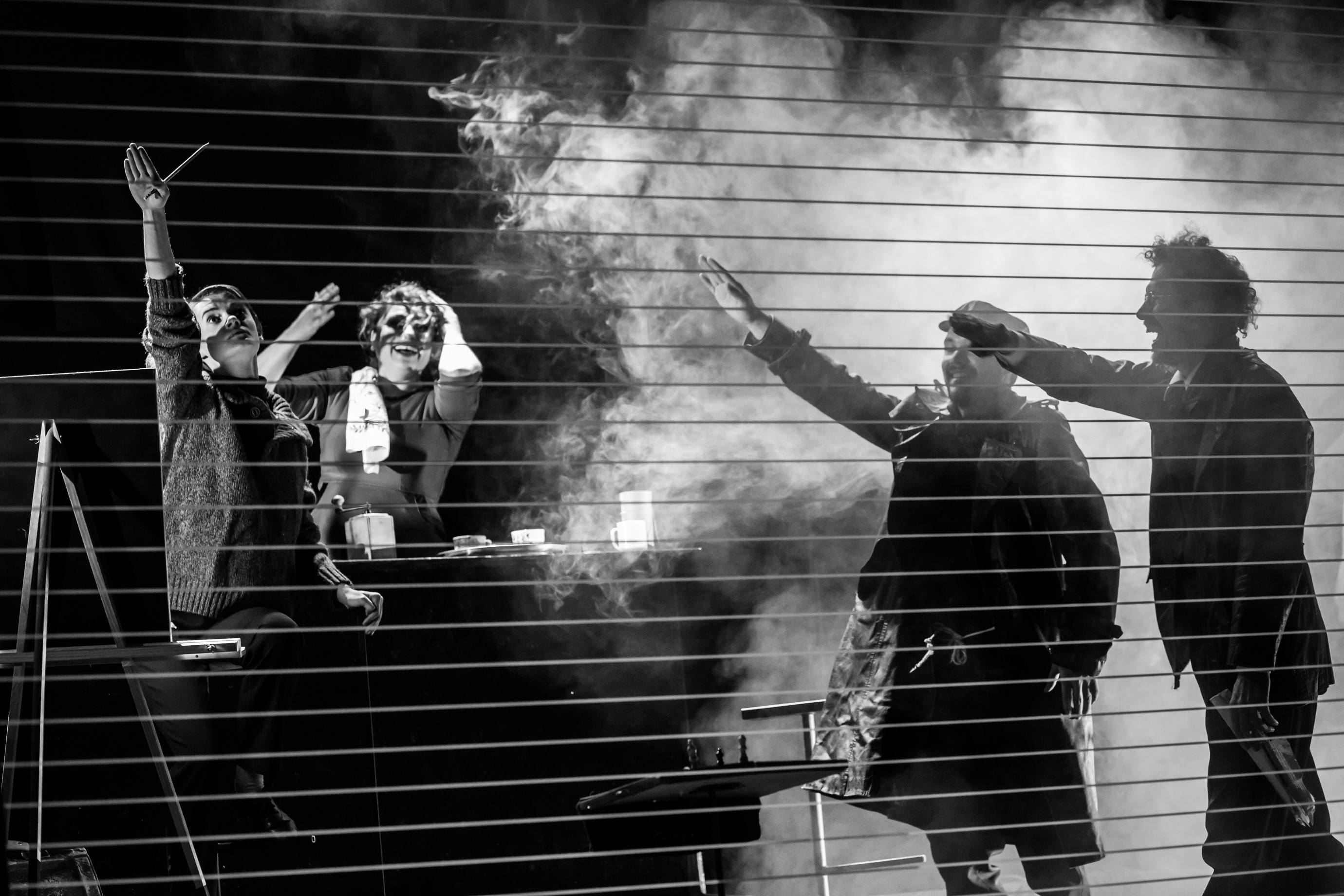
It is a distinct pleasure to observe the audience, especially when you are not watching the play for the first time — some internal processes are clearly happening to the public. For instance, it reminded me of the hypnotism of Kaa the python from Mowgli, when the monkeys (myself included) began twitching their hands during a scene where a young Hitler starts giving a Nazi salute, infecting everyone present — both the characters and the audience — with his gestures. Kolomiitsev conducts his experiment brilliantly (or hideously, depending on how one perceives it) and proves just how easily we all succumb to primitive manipulations.
The great Zhuangzi was once asked: “What is truth?” He replied (as people today would say, like a textbook postmodernist): “Truth is like nails, but goats must be fed cabbage.” Forgive me for such a bold and perhaps offensive comparison, but Kolomiitsev brings everyone who is currently capable of seeing and hearing into the realm of the superconscious, extending a hand to those who want to break free from the traps of the past. Sadly, by no means does everyone want that.
A hundred years have passed since the plausible meeting of Stalin, Trotsky, Hitler, and Freud in a Vienna café (the plot of the play). But does it even matter whether it happened or not? The consciousness and responsibility of society as a whole have not grown by a single fraction over the century. Have national societies (especially those that survived the horrors of two world wars) learned even a little bit to protect themselves from self-destruction? The world’s hostility toward itself, the human propensity for enmity, and latent, permanent hatred are gaining momentum once again. Man will probably always remain a predator, dangerous above all to his own kind.
The authorities of post-Soviet states exploit this vulnerability to their advantage, creating historical and cultural beliefs — shackles of consciousness, turning the Citizen into a subject, and the redundant into the fallen.
Of course, this play will not break these shackles; but it is my deepest conviction that Kolomiitsev’s “Sweet Blossoms” holds greater significance for modern Ukraine than one might think at first glance. In reality, history is made by loners and outsiders.
Time will tell whether I am wrong or right.
Text by Dmytro Yatsko
Photos by Iryna Moiseieva
---------------------------------------
«Цвєточкі» Олекси Коломійцева
еатральне мистецтво в порівнянні з іншими проявами людської фантазійності має на меті вдосконалення світосприйняття так званого глядача, що а) цілеспрямовано, б) випадково, в) з метою підгорнути жінку (чоловіка), г) по рознарядці управління культури, або д) просто за компанію йде в театр. Натомість, здебільшого український театр, як явище, загруз у комедіантстві та міфотворенні за попитом державних (та не тільки) інституцій. Химери хибних переконань та звільнення від забобонів — сьогодні не в прицілі театру. Це — факт. Але, в кожному з правил є виключення. Виключення — це не маргінальність, це — не випендрьож. Це те, що дає надію та насолоду через побачене.
Є такий режисер в Україні — Олексій Коломійцев. Не зірка, не ТБперсона, не… не… не… Але попри все — він є. Його вистави не приносять так званого задоволення та солодких переживань. Скоріше — це сеанси активної психотерапії задля перезавантаження світоглядів. Його наративи без перебільшення гіперактуальні у пошуках горезвісної істини. Зокрема, остання вистава Коломійцева «Цвєточкі…» глибоко (а може, й занадто) моралістична в своєму посиланні до української нації — не через гасла та лозунги, не через патріотичні заклики, а через муку народження свободної думки. «Думайте вільно» — каже Коломійцев своєму глядачу та б’є його табуретом по голові, як він любить висловлюватись.
Окрема насолода спостерігати за глядачами, тим більше, коли дивишся виставу не вперше — з публікою вочевидь відбуваються якісь внутрішні процеси. Мені, наприклад, це нагадало гіпноз змія Каа з «Мауглі», коли мавпи (я в їхньому числі) почали смикати руками у сцені, під час якої молодий Гітлер починає «зігувати» та заражає своїми жестами всіх присутніх — персонажів вистави та глядачів. Коломійцев блискуче (або потворно — це хто як сприймає) проводить свій експеримент та доводить — як легко ми всі піддаємося на примітивні маніпуляції.
У великого Жуан Цзі якось спитали: «Що таке істина?» Він відповів (як би зараз сказали — ніби стовідсотковий постмодерніст): «Істина подібна до цвяхів, але козлів треба годувати капустою». Перепрошую за таке зухвале та можливо образливе порівняння, але Коломійцев всіх тих, хто здатний нині бачити та чути, вводить у площину надсвідомості та простягає руку тим, хто хоче вивільнитись з капканів минулого. На жаль, бажають того далеко не всі.
Минуло сто років відтоді, коли відбулася вірогідна зустріч у віденській кав’ярні Сталіна, Троцького, Гітлера та Фройда (сюжет вистави). Та хіба має це значення — було — не було. Свідомість та відповідальність суспільства як такого за сторіччя не зросла ані на йоту. Чи суспільства національні (зокрема ті, що пережили жахи двох світових війн) хоч трохи навчилися оберігати самих себе від самознищення? Ворожість світу на свою власну адресу, людська схильність до ворогування та латентна перманентна ненависть знову набирає обертів. Людина, мабуть завжди залишиться хижаком, небезпечним до подібних собі насамперед.
Влади пострадянських держав вигідно для себе використовують цю можливість, створюючи історико-культурні переконання — кайдани свідомості, обертаючи Громадянина на підлеглого, а зайвих на полеглих.
Звісно, ця вистава не зруйнує ці кайдани; але на моє глибоке переконання, «Цвєточкі» Коломійцева мають більше значення для сучасної України, ніж про те можна подумати на перший погляд. Насправді, історію роблять одинаки та маргінали.
Час доведе — помиляюсь я чи ні.
Текст — Дмитро Яцко
Фото — Ірина Моісеєва